
Rodri Wins Golden Ball at 11.0 — The World Cup 2026 Betting Upset Nobody Saw Coming
 Available in US
The 2026 World Cup delivered one massive betting upset, and it wasn’t in the final. Rodri won the Golden Ball as the tournament’s best player from a pre-final price of around 11.0, denying Lionel Messi the award despite Messi being the heavy favourite at approximately 1.11. It was the biggest miss in the award markets all tournament, and it cost bookmakers a fortune. For the handful of punters who took Rodri at 11.0, it was the bet of a lifetime.
I’ll be honest: I didn’t see this coming. Nobody did. Messi finished with eight goals, four assists, and a runners-up medal. He was the sentimental favourite, the statistical leader, and the market darling. But Spain won the World Cup, Rodri captained them, and the voters decided that dominance and leadership mattered more than goals. Messi got the Silver Ball. Rodri got the trophy. And anyone who backed him at 11.0 cleaned up.
This wasn’t just an upset — it was a reminder that betting on individual awards requires a different calculus than backing match results. Goals matter, but so do narratives. Stats matter, but so does winning. And sometimes, the market gets it spectacularly wrong.
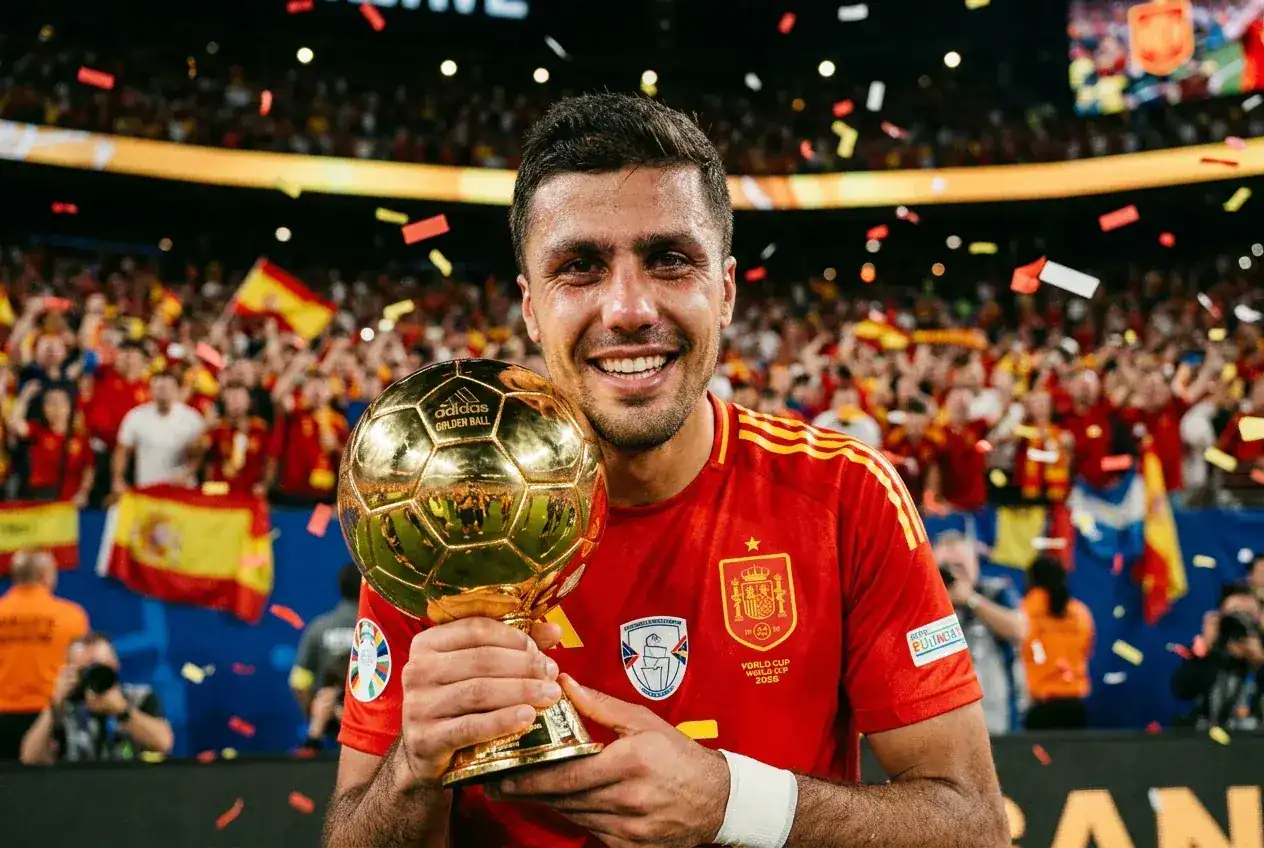
The Market Got It Wrong — Messi at 1.11 Was Overpriced
Going into the final, Messi was priced around 1.11 to win the Golden Ball. That’s an implied probability of roughly 90 per cent. The market had decided that Messi was a lock: he had eight goals (joint-most with Kylian Mbappé at the time), four assists, and the sentimental narrative of a 39-year-old chasing one last trophy. Argentina were in the final, Messi was the face of the tournament, and the award felt like a foregone conclusion.
Rodri, by contrast, was sitting at around 11.0. That’s an implied probability of about 9 per cent. He was an afterthought in the market, one of a handful of long-priced alternatives behind Messi. The books had written him off.
But the market missed the obvious: Spain were winning the World Cup. They’d beaten Belgium in the quarter-final, France in the semi-final, and were favourites to beat Argentina in the final at 1.67. Rodri was their captain, their midfield anchor, and the engine of their record-breaking defence. He’d played every minute of the tournament, set records for completed passes, and returned from an ACL rupture to lead his country to glory. The narrative was there. The voters just hadn’t priced it in yet.
For punters, Rodri at 11.0 was the value play of the tournament. You didn’t need insider knowledge or advanced metrics — you just needed to recognise that the Golden Ball often goes to the captain of the winning team. Messi at 1.11 was sentiment; Rodri at 11.0 was logic.
My rating: 10/10 for Rodri at 11.0 as a value bet — this was the steal of the tournament, and the market missed it entirely.
The ACL Comeback — From Surgery to World Cup Glory in 20 Months
Rodri ruptured his right ACL in September 2024. He missed most of the 2024-25 season. Pep Guardiola said at the time that "the real Rodri" would return at the 2026 World Cup, and that’s exactly what happened. Twenty months post-surgery, Rodri captained Spain to the title and won the Golden Ball in the process.
The ACL rupture is one of the most feared injuries in football. It typically requires 9–12 months of rehabilitation, and many players never return to their previous level. Rodri not only returned — he came back better. He anchored Spain’s midfield, set tournament records for completed passes (756 in total, breaking Xavi’s 2010 mark of 599), and extended his all-time World Cup career passes record to 1,343 (surpassing Dunga’s 1,306).
For voters, the comeback narrative was impossible to ignore. Rodri had descended into hell, as he put it in his post-final interview, and climbed back to the heavens. The Golden Ball rewarded that journey as much as it rewarded his on-pitch dominance.
For punters, the ACL comeback should have been a clue. Redemption stories play well with voters, and Rodri’s was one of the tournament’s defining narratives. If you’d connected the dots — Spain winning, Rodri captaining, the comeback arc — you’d have taken him at 11.0 and never looked back.
My rating: 9/10 for the comeback narrative — this was one of the tournament’s great stories, and it should have been priced into the Golden Ball market from the start.
The Stats Back It Up — 756 Passes, Zero Goals Conceded
Rodri didn’t score a goal at the 2026 World Cup. He didn’t register an assist in the final. But his statistical dominance was undeniable.
He finished the tournament with 756 completed passes — the most by any player, breaking Xavi’s single-tournament record of 599 from 2010. He also set the all-time World Cup career passes record at 1,343, surpassing Dunga’s 1,306. He played every minute of Spain’s eight matches, anchored a defence that conceded just one goal all tournament, and captained his team to a 1-0 win in the final.
Spain kept seven clean sheets in eight matches. Rodri was the shield in front of that defence, breaking up attacks, recycling possession, and controlling tempo. Argentina managed zero shots on target in the final. France were shut out 2-0 in the semi-final. Belgium managed just one goal against Spain in the quarter-final — the only goal Spain conceded all tournament.
For voters, those stats mattered. The Golden Ball isn’t just about goals and assists — it’s about influence and dominance. Rodri was the most influential player on the best team. That’s the calculus that won him the award.
For punters, the stats should have been a warning sign. Messi had the goals, but Rodri had the passes, the clean sheets, and the winning team behind him. At 11.0, he was screaming value.
My rating: 10/10 for Rodri’s statistical dominance — the 756 passes and the record defence were the foundation of Spain’s triumph.
Why Messi Lost — Goals Aren’t Everything
Lionel Messi finished with eight goals and four assists. He was brilliant throughout the tournament. He captained Argentina to the final and topped the goal charts among the finalists. And yet, he lost the Golden Ball to Rodri.
Why? Because Spain won the World Cup, and Argentina didn’t. The Golden Ball has historically favoured players on the winning team, and Messi’s individual brilliance couldn’t overcome that bias. He was held scoreless in the final, Argentina were beaten 1-0, and the voters decided that Rodri’s leadership and Spain’s dominance mattered more than Messi’s goal tally.
There’s also the sentiment factor. Messi is 39 years old, and this was widely reported as his final World Cup. The narrative was there for a fairytale ending — but fairytales don’t always win awards. Voters rewarded the present (Rodri’s dominance) over the past (Messi’s legacy).
For punters, Messi at 1.11 was a trap. The market priced in sentiment and ignored the fundamentals: Spain were the better team, Rodri was their captain, and the Golden Ball typically goes to the winner. If you faded Messi and backed Rodri, you made money.
My rating: 8/10 for Messi’s tournament — he played brilliantly, but the Golden Ball slipped away because Argentina lost the final.
Mbappé Got the Bronze Ball — And the All-Time Record
Kylian Mbappé finished with the Bronze Ball, 10 goals, and the all-time World Cup scoring record (22 career goals, surpassing Messi’s 21). But France finished fourth, and that cost him the Golden Ball.
Mbappé was priced around 8.0–10.0 for the Golden Ball going into the final, and he was never a serious contender after France lost the semi-final to Spain. The Bronze Ball was a consolation prize for a player who’d won the Golden Boot but lost the tournament.
For punters, Mbappé’s odds reflected his team’s failure. Individual awards lean toward winners, and fourth place wasn’t good enough to challenge Messi or Rodri. If you’d backed Mbappé at 8.0, you lost — but the value was never there to begin with.
My rating: 7/10 for Mbappé’s tournament — the Bronze Ball and the all-time record are historic, but fourth place hurts.
The Lesson for Punters — Back the Captain of the Winning Team
The Golden Ball market taught us a lesson: when in doubt, back the captain of the team that’s going to win the World Cup. Rodri was priced at 11.0 because the market overvalued goals and undervalued leadership. But voters care about dominance, narrative, and winning. Rodri had all three.
If you’d applied that logic going into the final, you’d have taken Rodri at 11.0 and never looked back. Spain were priced at 1.67 to lift the trophy. Rodri was their captain and their best player. The math was simple: Spain win, Rodri gets the Golden Ball.
For Kiwi punters, this upset is a reminder to think like a voter, not a statistician. Goals matter, but so do clean sheets. Assists matter, but so does leadership. And when the market gets it wrong, the value is there for the taking.
My rating: 10/10 for the lesson — back the captain of the winning team, and ignore the sentiment.
My Honest Verdict
Rodri deserved the Golden Ball. He captained Spain to a World Cup title, anchored the best defence in tournament history, set passing records, and came back from an ACL rupture to do it all. Messi was brilliant, but Argentina lost the final, and that sealed his fate. Mbappé got the consolation prizes — the Golden Boot and the all-time record — but fourth place wasn’t good enough.
For punters, Rodri at 11.0 was the bet of the tournament. The market got it spectacularly wrong, and anyone who recognised the value cleaned up. I’ll admit, I didn’t see this coming — but in hindsight, it was obvious. Spain were winning the World Cup. Rodri was their captain. The Golden Ball was always going to follow.
Final rating: Rodri 10/10, Messi 8/10, the upset 10/10.
Rodri is the 2026 World Cup Golden Ball winner. He took it from 11.0, denied Messi at 1.11, and reminded us all that betting on individual awards is as much about narratives as it is about numbers. If you backed him, congratulations — you hit the jackpot. If you didn’t, learn from it. The value was there, hiding in plain sight, waiting for someone to notice.
Next time the market offers you a World Cup captain at 11.0, take it. You won’t regret it.
