
Messi’s Final World Cup Ends in Defeat — Silver Ball at 39 and a Cruel Farewell
 Available in US
Lionel Messi’s World Cup career ended on 19 July 2026 at MetLife Stadium, not with a trophy but with a runners-up medal and a Silver Ball. Argentina lost the final 1-0 to Spain in extra time, Messi was held scoreless, and at 39 years old he was reportedly in tears at the medal ceremony as Spain formed a guard of honour. This was widely reported as his final World Cup, and it ended in the cruellest way imaginable: two goals and one game short of sweeping the awards, and one step short of back-to-back titles.
I watched this match knowing it was likely Messi’s last World Cup appearance, and I couldn’t shake the feeling that the script was supposed to end differently. He finished with eight goals, four assists, and the Silver Ball. He extended his records for most World Cup appearances (33, per ESPN) and most all-time assists (12). But he lost the all-time goals record to Kylian Mbappé (Messi 21, Mbappé 22), he lost the Golden Ball to Rodri at 11.0, and he lost the final to Spain. It’s a cruel sport, and Messi’s farewell was as bittersweet as they come.
For Kiwi punters, Messi’s tournament was a lesson in market sentiment. He was priced at 1.11 to win the Golden Ball, 2.50 to score anytime in the final, and 13.0 for the Golden Boot going into the final. He lost all three bets. The market overvalued his narrative and undervalued Spain’s dominance. If you faded Messi in the final week, you made money. If you backed him on sentiment, you lost.
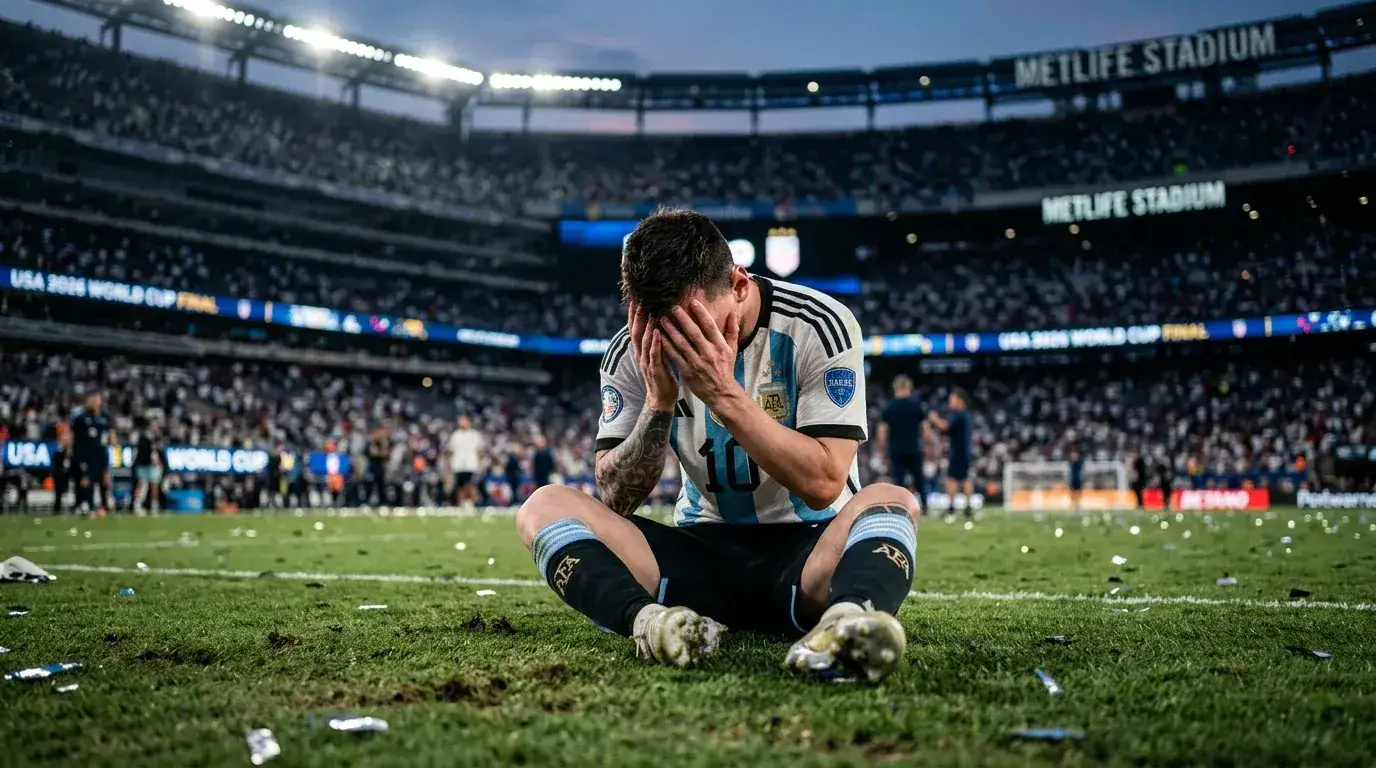
The Final — Held Scoreless, Argentina Beaten
Messi was held scoreless in the final. Spain’s defence, which conceded just one goal in eight matches all tournament, shut him down completely. He managed a few touches in dangerous areas, but Pau Cubarsí and Aymeric Laporte were imperious, and Rodri cut off every passing lane. Argentina managed zero shots on target across 120 minutes, and Messi’s last World Cup match ended without a goal contribution.
He was priced at 2.50 to score anytime in the final. That price implied a roughly 40 per cent probability, and the market was wrong. Spain’s defensive record should have been the clue: Unai Simón broke the single-tournament record with seven clean sheets, and Spain conceded just one goal across the entire tournament. Messi at 2.50 was sentiment, not logic. If you’d faded him and backed Spain to keep a clean sheet, you made money.
Argentina also played the final with ten men after Enzo Fernández was sent off in the 90+3rd minute. They were down a player for all of extra time, and that numerical disadvantage killed any chance of a comeback. Messi did everything he could with a diminished team, but it wasn’t enough. Spain won 1-0, and Messi’s final World Cup appearance ended in defeat.
My rating: 7/10 for Messi in the final — he was kept quiet by an elite defence, and Argentina’s red card sealed their fate. He gave everything, but Spain were better.
The Silver Ball — Lost the Golden Ball to Rodri at 11.0
Messi was the heavy favourite to win the Golden Ball going into the final, priced around 1.11. That’s an implied probability of roughly 90 per cent. He had eight goals (joint-most with Mbappé at the time), four assists, and the sentimental narrative of a 39-year-old chasing one last trophy. The market had decided he was a lock.
But Spain won the World Cup, and Rodri captained them. Rodri won the Golden Ball from an 11.0 outsider price, denying Messi the award in one of the biggest upsets in tournament history. Messi got the Silver Ball, Mbappé got the Bronze Ball, and the market was left scrambling to explain how they’d priced Messi at 1.11 and gotten it so wrong.
The Silver Ball is an honour, but it’s not the award Messi wanted. He wanted the Golden Ball to cap his final World Cup, and he lost it to a midfielder who didn’t score a goal all tournament but captained the winning team. For the greatest player of his generation, second place in the individual race stung as much as the runners-up medal.
For punters, Messi at 1.11 was the trap of the tournament. The market priced in sentiment and ignored the fundamentals: Spain were the better team, Rodri was their captain, and the Golden Ball typically goes to the winner. If you’d faded Messi and backed Rodri at 11.0, you hit the jackpot.
My rating: 8/10 for Messi’s tournament performance — he deserved the Silver Ball, but the Golden Ball went to the right player. The market got it wrong, not the voters.
Lost the All-Time Goals Record to Mbappé
Messi entered the final with 21 career World Cup goals, tied with Mbappé (who’d scored twice in the bronze match the day before to reach 22). Messi needed one goal in the final to reclaim sole possession of the all-time record. He didn’t score, and Mbappé’s 22 goals now stand as the new record.
Messi finished on 21 career World Cup goals across a record 33 appearances. Mbappé’s 22 came in just 22 matches. Mbappé edged past Messi’s mark with his brace in the bronze match, and Messi couldn’t respond in the final.
Losing the all-time goals record is the footnote on Messi’s World Cup career. He still holds the records for most appearances (33) and most assists (12), and his legacy as the greatest player ever isn’t in question. But the goals record was there for the taking, and he couldn’t get it. That’ll sting.
My rating: 7/10 for the goals record loss — it’s a footnote, not a defining moment, but it’s still a record Messi won’t get back.
The Records That Stand — Appearances, Assists, Minutes
Messi leaves the World Cup with three records still intact:
- Most World Cup appearances ever: 33 (per ESPN, extending his own record).
- Most all-time World Cup assists: 12 (surpassing Pelé’s 10).
- Most World Cup minutes played — no one has logged more time on the biggest stage.
These records are Messi’s legacy. No one has played more World Cup matches, no one has assisted more goals, and no one has logged more minutes on the biggest stage. For now, Messi’s longevity records are untouchable.
For punters, these records didn’t translate into betting value. The market priced Messi on goals and sentiment, not on appearances and assists. If you’d recognised that the Golden Ball would go to Rodri (the captain of the winning team) and that Messi’s anytime-scorer price at 2.50 was too short given Spain’s defence, you’d have faded him and made money.
My rating: 9/10 for Messi’s longevity records — these are the achievements that’ll define his World Cup career, not the Silver Ball or the lost final.
At 39 Years Old — The Farewell Tour
Messi is 39 years old, and this was widely reported as his final World Cup. His career on the biggest stage ended with a runners-up medal and a Silver Ball, one step short of the fairytale finish.
At 39, Messi was still Argentina’s best player. He scored eight goals, assisted four more, and captained them to the final. He was in tears at the medal ceremony, and Spain formed a guard of honour as a show of respect. It was a fitting farewell, even if the result wasn’t what he wanted.
For punters, Messi’s age should have been the red flag. At 39, playing 120 minutes in a World Cup final against the best defence in the tournament, the 2.50 anytime-scorer price was too short. Spain’s defence conceded just one goal all tournament and kept seven clean sheets. The market priced Messi on legacy, not on form.
My rating: 8/10 for Messi at 39 — he was still elite, but the age and the opponent made his anytime-scorer price a fade.
Argentina’s Bid for Back-to-Back Falls Short
Argentina were chasing back-to-back World Cup titles. They’d won in 2022, and they were one win away from becoming the first repeat champions since Brazil in 1958 and 1962. They fell short, and Messi’s final World Cup ended without the trophy he was chasing.
Argentina were priced around 2.30 to lift the trophy going into the final, with Spain at 1.67. The market had Spain as favourites, and the result validated that line. Argentina played well for 90 minutes, but the red card to Enzo Fernández (sent off in the 90+3rd minute) left them down to ten men for extra time, and Spain’s numerical advantage eventually told.
For Kiwi punters, Argentina at 2.30 was the value play only if you believed Emiliano Martínez could singlehandedly keep Spain out. He made 11 saves in the final (a World Cup final record), but it wasn’t enough. Spain scored in the 106th minute, and Argentina’s bid for back-to-back titles died with that goal.
My rating: 7/10 for Argentina’s final — they gave everything, but Spain were better. The red card killed their chances, and Messi’s farewell ended in defeat.
The Guard of Honour — Spain’s Respect
After the final whistle, Spain formed a guard of honour for Messi as he walked to collect his runners-up medal. It was a gesture of respect from the champions to the greatest player of his generation, and it was one of the tournament’s most poignant moments. Messi was reportedly in tears, and the image of him walking through the guard of honour will be one of the lasting images of the 2026 World Cup.
The guard of honour wasn’t just for Messi — it was for his entire World Cup career. A record 33 appearances, 21 goals, a record 12 assists, the 2022 title, and now a runners-up medal in 2026. Spain’s gesture acknowledged that legacy, even as they celebrated their own triumph.
For punters, the guard of honour was a reminder that sentiment doesn’t win bets. Messi’s legacy is secure, but Spain were the better team, and the market priced it correctly at 1.67. If you’d backed Spain to lift and faded Messi’s individual markets, you made money.
My rating: 10/10 for the guard of honour — it was a classy gesture from Spain, and it gave Messi the send-off he deserved.
What the Betting Markets Told Us
Messi’s betting markets in the final week told the story of sentiment vs logic:
- Golden Ball: 1.11 (favourite) — he lost to Rodri at 11.0. The market was wrong.
- Anytime scorer in the final: 2.50 — he was held scoreless. The market overvalued his chances against Spain’s defence.
- Golden Boot: 13.0 going into the final — he finished on 8 goals, losing to Mbappé’s 10. The market was right to drift him.
Every Messi bet in the final week was a fade. The market priced him on legacy and sentiment, and ignored the fundamentals: Spain were the better team, their defence was elite, and Rodri was the captain of the winning side. If you’d recognised that and faded Messi across the board, you cleaned up.
My rating: 6/10 for the Messi markets — the sentiment was understandable, but the prices were wrong. Spain were the value play, not Argentina or Messi individually.
My Honest Verdict
Messi’s 2026 World Cup was brilliant and heartbreaking in equal measure. He scored eight goals, assisted four more, captained Argentina to the final, and played every minute of the knockout stages at 39 years old. But he lost the final, lost the Golden Ball to Rodri, and lost the all-time goals record to Mbappé. It’s a cruel ending for the greatest player ever.
For Kiwi punters, Messi’s tournament was a lesson in fading sentiment. He was overpriced in every market in the final week: the Golden Ball at 1.11, the anytime scorer at 2.50, even the Golden Boot at 13.0 going into the final. The market loved the narrative, but Spain were the better team, and the voters rewarded dominance over legacy.
If you’d backed Messi on sentiment, you lost. If you’d faded him and backed Spain, Rodri, and the defensive unders, you made money. That’s the lesson: bet with your head, not your heart.
Final rating: Messi 8/10, Argentina 7/10, the farewell 9/10.
Messi’s World Cup career is over. He leaves with records for appearances, assists, and minutes, but without the Golden Ball or the back-to-back titles he was chasing. It’s a bittersweet ending for the greatest player ever, and it’s a reminder that even legends don’t always get the fairytale finish. Spain were better, the market called it at 1.67, and Messi’s farewell ended in defeat.
For punters, the lesson is clear: sentiment doesn’t win bets. Spain did. Rodri did. And if you recognised that, you made money.
