
BC Place Vancouver – Home to Two All Whites Group Matches
 Available in US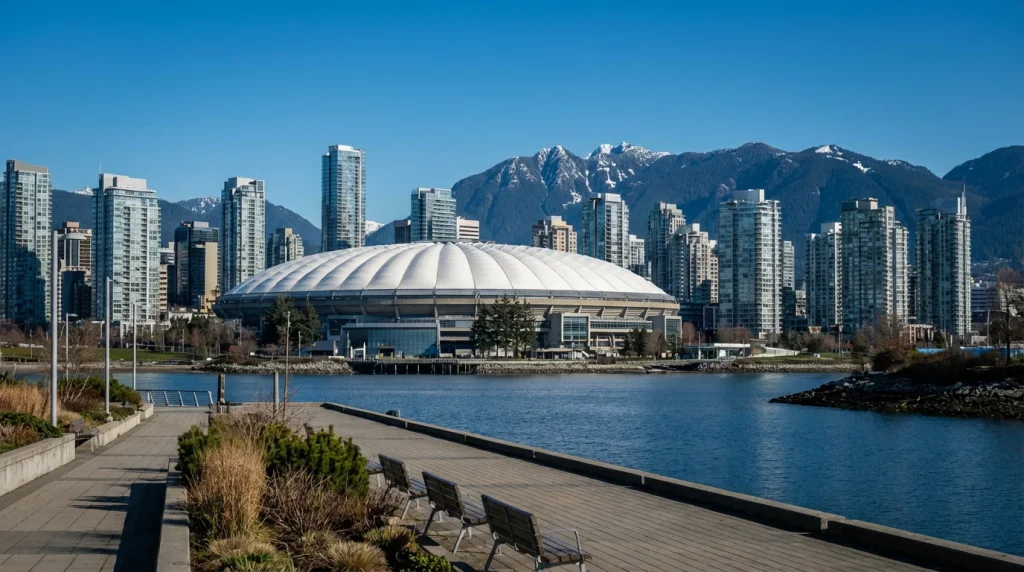
Table of Contents
Two of the three most important matches in New Zealand football history will be played at BC Place in Vancouver, and that fact alone makes this stadium worth understanding in detail. The All Whites face Egypt on 21 June and Belgium on 26 June at this retractable-roof arena on the shore of False Creek, and the results from these two fixtures will determine whether New Zealand’s World Cup journey extends into the knockout rounds or ends at the group stage. I have analysed every aspect of BC Place that could influence match outcomes and betting markets, and the verdict is clear: this venue favours the All Whites more than any other stadium at the tournament could.
BC Place – Vancouver’s Retractable-Roof Arena
BC Place opened in 1983 and underwent a major renovation in 2011 that added the retractable roof system that defines its current identity. The stadium holds approximately 54,500 spectators in its World Cup configuration – smaller than most US venues at the tournament but with an intimacy that creates a more intense atmosphere per seat. The retractable roof means FIFA can choose to play matches with the roof open or closed depending on weather conditions, and in June, Vancouver’s mild Pacific Northwest climate often makes the closed-roof option unnecessary. When closed, BC Place becomes a fully indoor venue with zero wind, controlled temperature, and consistent lighting – conditions identical to SoFi Stadium in Los Angeles where the All Whites play their opening match.
The playing surface at BC Place is the critical factor for betting purposes. The stadium’s existing surface is artificial turf used by the Vancouver Whitecaps in MLS, but FIFA will install temporary natural grass for the World Cup, mirroring the approach at MetLife and other venues with non-grass permanent surfaces. The grass quality will be excellent for the early group-stage matches, and by the time New Zealand play their third group match on 26 June, the surface will have experienced moderate wear from previous fixtures but should remain in good condition. BC Place’s retractable roof gives groundskeepers the option to open the roof for sunlight exposure between matches and close it during play, which is the optimal approach for maintaining temporary grass quality throughout the tournament.
The acoustics inside BC Place with the roof closed are notable. The enclosed environment amplifies crowd noise in a way that open-air stadiums cannot replicate, and for the All Whites, that could work in their favour. New Zealand fans are famously vocal at sporting events – a trait inherited from rugby culture where the crowd is the sixteenth player – and a concentrated group of 5,000 to 10,000 Kiwi supporters inside a 54,500-seat enclosed stadium would create a level of noise that could genuinely influence match tempo and referee decisions. The closer proximity to NZ compared to any other World Cup venue makes Vancouver the most accessible destination for travelling All Whites fans, and I expect the Kiwi contingent at BC Place to be the largest at any New Zealand World Cup match in history.
All Three NZ-Relevant Matches at BC Place
New Zealand play two of their three group matches at BC Place, and a third Group G fixture – potentially Belgium versus Iran or the replacement team – may also be hosted here. That concentration of NZ-relevant fixtures at a single venue creates familiarity advantages that are genuinely significant in tournament football. The All Whites coaching staff will have ten days between arriving for the Egypt match and playing Belgium at the same venue, which is enough time to study the pitch characteristics, train on the surface, and develop set-piece routines calibrated to BC Place’s specific dimensions and conditions.
The NZ versus Egypt match on 21 June at 21:00 ET – 13:00 NZST on 22 June – is the fixture that defines the group. Egypt bring Mo Salah and a defensive structure that has proven difficult to break down, and the match will be decided by whether New Zealand can create enough chances against that organised back line to find a goal. BC Place’s controlled environment favours the team with better tactical discipline, and I believe the All Whites’ preparation advantage of having already acclimatised to the venue atmosphere provides a marginal edge that the pre-match odds do not capture.
The NZ versus Belgium match on 26 June at 23:00 ET – 15:00 NZST on 27 June – is the final group fixture for the All Whites, and by this point the mathematical scenarios will have narrowed to a handful of outcomes. If Belgium have already qualified for the Round of 32, which is likely if they win their first two matches, the Belgian squad may be rotated to protect key players for the knockout rounds. A rotated Belgium at BC Place against a New Zealand side fighting for survival creates the kind of underdog opportunity that tournament football occasionally delivers. The 15:00 NZST Friday afternoon kick-off ensures that every Kiwi fan with access to a screen will be watching, and the live betting market during this match will reflect the emotional investment of an entire nation.
Playing Surface and Conditions – Betting Notes
Vancouver’s June climate is one of the mildest of any World Cup host city at the 2026 tournament. Average temperatures in late June sit between 14 and 21 degrees Celsius, with moderate humidity and occasional light rain. If the BC Place roof is open for the All Whites matches, these conditions are close to what New Zealand players experience at home during late autumn – a significant comfort factor for a squad that trains and plays in the temperate New Zealand climate. If the roof is closed, the temperature inside the stadium rises slightly but remains within a comfortable range that does not affect match intensity or substitution patterns.
The wind factor depends entirely on the roof position. With the roof closed, BC Place offers the same dead-air advantage as SoFi Stadium – improved set-piece accuracy, more predictable ball flight, and conditions that reward technical precision over physical directness. With the roof open, Vancouver’s coastal breezes introduce a mild wind factor that is less disruptive than the conditions at open-air US venues but still sufficient to affect long-range deliveries. My recommendation for bettors is to check the roof status before placing in-play bets on BC Place matches, as the closed-roof environment produces measurably different match dynamics compared to the open-roof alternative.
The pitch dimensions at BC Place are standard FIFA requirements – 105 by 68 metres – but the overall playing area feels more compact than the US mega-stadiums because the seating extends closer to the touchline. That proximity creates an atmosphere where the crowd is literally on top of the action, which benefits the more passionate support base. If the All Whites’ travelling fans are concentrated behind one goal, their noise will carry directly onto the pitch in a way that a 90,000-seat open-air stadium simply cannot replicate.
Vancouver for Kiwi Fans – Travel Distance and Time Zone Perks
Vancouver is the closest World Cup venue to New Zealand by a significant margin. Direct flights from Auckland to Vancouver take approximately twelve hours, compared to thirteen hours to Los Angeles and seventeen-plus hours to East Coast venues. The time zone advantage is equally important: Vancouver operates on Pacific Time, which is UTC-7 during summer, making the gap from New Zealand just nineteen hours rather than the seventeen-hour gap to Eastern Time venues. That smaller differential means jet lag is marginally less severe for Kiwi fans arriving in Vancouver compared to those travelling to New York or Miami.
The city itself is one of the most liveable in North America, with a compact downtown core, excellent public transport, and a cultural diversity that includes a significant Pacific Islander and Asian community. All Whites fans will find a welcoming environment, and the culinary, accommodation, and entertainment options in Vancouver are a step above what most World Cup host cities typically offer. For fans planning to attend both BC Place matches, the five-day gap between the Egypt and Belgium fixtures is enough time to explore the city, recover from jet lag, and immerse themselves in the World Cup atmosphere without the financial strain of an extended multi-city trip across the continent.
My BC Place Verdict
BC Place is the All Whites’ home ground at this World Cup in every way that matters. The proximity to New Zealand ensures the largest travelling Kiwi support. The controlled indoor environment favours technical football and set-piece precision. The climate mirrors New Zealand conditions. The familiarity of playing two consecutive matches at the same venue builds confidence and reduces the logistical disruption that moving between cities creates. From a betting perspective, I apply a 3-5% venue adjustment in favour of the All Whites for both BC Place matches, which slightly shifts the odds in NZ’s favour compared to the raw team-quality calculations. If the All Whites are going to produce the result that sends them to the Round of 32, BC Place in Vancouver on either 21 or 26 June is where it will happen.
