
World Cup 2026 Odds — My Rating of Every Major Market
 Available in US
Table of Contents
The outright market for the 2026 World Cup has been open since the day after the final draw in Washington DC, and the prices have barely moved in three months. That tells me one of two things: either the bookmakers got the initial pricing exactly right, or the market is asleep and waiting for the UEFA and intercontinental playoffs on 31 March to inject some volatility. I am betting on the latter. In nine years of analysing tournament odds, the period between the draw and the first kickoff is where the best pre-tournament value hides — and this cycle is no exception.
What follows is my personal rating of every major World Cup 2026 odds market, from the outright winner down to specials and props. I use decimal odds throughout — the standard format on TAB NZ and the most intuitive for calculating returns. Where I reference specific prices, they reflect the ranges available in March 2026 and should be checked against your platform at the time you read this, because odds shift. My ratings use a 10-point scale: 10 means I consider the market an excellent source of value for informed punters, 1 means I think the market is a trap.
The short version: I rate group-winner odds and top-scorer odds as the best value markets at this World Cup. Outright winner is solid if you target the 15.00-to-40.00 range rather than the frontrunners. Specials and props are hit-or-miss but contain hidden gems. And the All Whites odds carry genuine value if you know which markets to attack.
Outright Winner — Who Deserves Your Money
Every World Cup, the outright market splits into the same three tiers: the short-priced favourites everyone backs, the mid-range contenders that attract sharp money, and the longshots that exist mostly as lottery tickets. The 2026 edition is no different, except that the 48-team format compresses the top tier and stretches the bottom tier in ways that create more value than usual in the middle.
Brazil, France, Argentina, and England sit at the top of most outright markets, priced between 5.00 and 8.00 depending on the platform. Spain typically sits just behind at 8.00 to 10.00, which I consider a mispricing — their Euro 2024 title, the youth of their core squad, and their draw in Group H make them the best value among the genuine contenders. Germany and the Netherlands occupy the 12.00-to-18.00 range, and Portugal usually sits around 14.00.
Tier 1 — The Genuine Contenders
I define a genuine contender as a team with the squad depth, tactical sophistication, and tournament pedigree to win seven matches against progressively stronger opposition over 39 days. By that standard, only five teams qualify: Brazil, France, Argentina, England, and Spain. Germany and Portugal are close but lack either the defensive solidity (Germany) or the midfield depth (Portugal) to sustain a seven-match run against the best in the world.
Among these five, my ordering diverges from the market. Spain are my top-rated side, and I have explained my reasoning in detail on the 2026 World Cup predictions page. The short version: Lamine Yamal, Pedri, Gavi, and Nico Williams give Spain the youngest, most dynamic attacking core at the tournament, and their full-back play under Luis de la Fuente is the best I have seen from any national team in four years. At 8.00 to 10.00, they offer better value than France at 5.50 to 6.50, whose midfield has lost some of its depth since Qatar.
Argentina at 6.00 to 7.00 are fairly priced. They have the defending-champion tag, the best player in history (even at 38, even if he only features as a substitute), and a settled squad that knows how to win knockout matches under Lionel Scaloni. The question is whether Scaloni’s group — built around a 2022 core that is now four years older — can sustain the intensity of a 48-team tournament. I rate Argentina as the team most likely to exit earlier than expected, not because they are weak but because the margin between their best and second-best elevens is narrower than it appears.
England at 7.00 to 8.50 carry the perennial caveat: they have the talent but rarely deliver in the matches that matter most. The counter-argument is that their squad depth across midfield and attack is unmatched — Bellingham, Rice, Saka, Foden, Palmer, Gordon — and the 2026 tournament structure gives them six days between knockout rounds rather than three or four, which benefits the deepest squads. I rate England as underpriced for the semi-finals and overpriced for the title. If you can find a market for “England to reach the semi-final” at 2.50 or above, take it.
Brazil at 5.50 to 7.00 are the most volatile pick in the tier. Their CONMEBOL qualifying campaign was turbulent, and the coaching situation has been unsettled. But they have Vinícius Júnior, Rodrygo, and Endrick, plus enough defensive talent to find a functional back line if the manager gets the balance right. I do not back Brazil on the outright at these prices — the risk-reward does not justify it — but I would not fade them either.
France at 5.50 to 6.50 are the market favourite in most books, and I think that price is about right. Mbappé is the best player in the tournament, the squad depth is excellent, and Deschamps has proven himself a tournament operator who prioritises results over aesthetics. My reservation is that France have not replaced Pogba’s midfield influence and their left-back options remain a concern. At odds-on or close to it in some markets, I pass. At 6.50, I nibble.
Tier 2 — Dark Horses Worth a Look
The 15.00-to-40.00 range is where my outright allocation lives, and three teams stand out. The Netherlands at 14.00 to 18.00 have a draw in Group F (Japan, Tunisia, and a UEFA playoff team) that could see them cruise through the group stage, and their blend of Eredivisie flair and Premier League physicality makes them dangerous in knockout matches. I rate them 7 out of 10 for outright value.
Colombia at 30.00 to 40.00 are the pick I keep coming back to. Drawn in Group K with Portugal, Uzbekistan, and an intercontinental playoff winner, they are not guaranteed to top the group, but their attacking talent — Luis Díaz, Jhon Arias, and an emerging generation behind them — is explosive. Colombian teams peak at tournaments when expectations are manageable, and 30.00 is a price that allows them to lose in the quarter-finals and still represent value if you backed them each-way or in a “to reach the semi-final” market.
Japan at 40.00 to 60.00 are my longest outright shot. I profiled them in detail separately, but the summary is that their European-based core is the strongest Japan have ever assembled, their group (F — Netherlands, Tunisia, playoff team) gives them a realistic path to the round of 32, and their 2022 group-stage victories over Germany and Spain were not flukes — they reflected a tactical system specifically designed to exploit the weaknesses of possession-heavy European sides. At 40.00 or above, I am in.
Group Winner Odds — My Picks Across All 12
If outright markets are the headline act, group-winner markets are the opening band that nobody came to see but everyone talks about afterward. I rate group-winner betting at 9 out of 10 for the 2026 World Cup — the highest of any market — because the expanded format and the sheer number of groups create inefficiencies that the bookmakers cannot fully price out three months before kickoff.
Rather than run through all 12 groups in exhaustive detail here (that exercise lives on the World Cup 2026 groups page), I will highlight the five group-winner bets I rate most highly as of late March 2026.
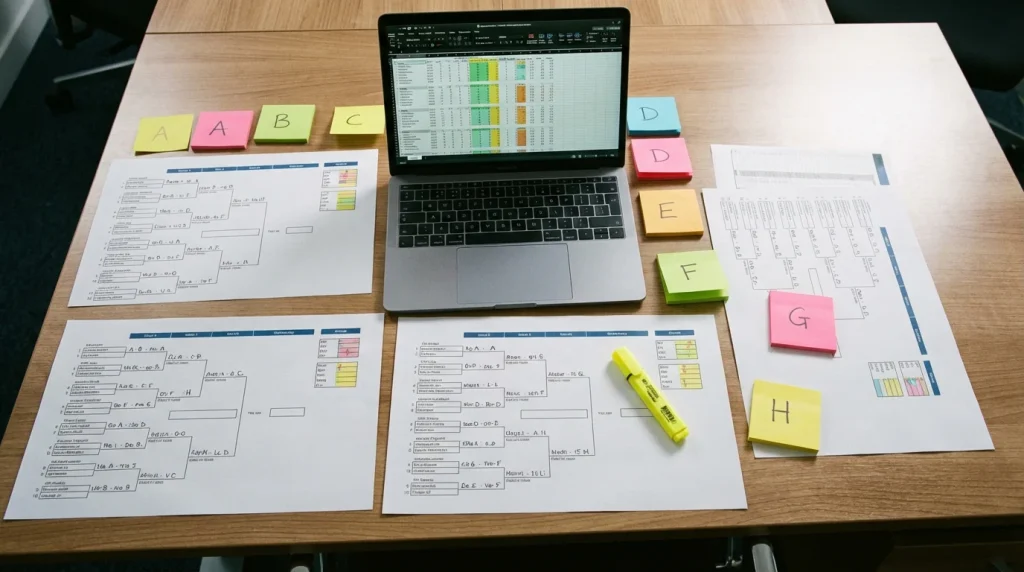
Group A — Mexico at 1.90 to 2.10. The host advantage at Estadio Azteca on matchday one, a manageable draw against South Korea, South Africa, and a UEFA playoff team, and the emotional energy of opening the entire World Cup. Mexico have underperformed at recent tournaments, but home soil changes the calculus. At 2.00 or above, I back them.
Group D — USA at 1.60 to 1.80. The primary host nation, playing all group matches on home soil. The draw gave them Paraguay, Australia, and a UEFA playoff team from Path C. The USMNT have inconsistencies, but the 12th-man effect in a home World Cup is historically one of the strongest biases in the sport. Even at the shorter price, I rate this as solid value.
Group E — Germany at 1.50 to 1.70. Côte d’Ivoire, Ecuador, and Curaçao. This is the weakest group in the tournament by any metric, and Germany’s post-Euro-2024 rebuild has shown enough promise to expect them to handle it comfortably. The short price reflects the lack of a genuine challenger, but 1.60 still carries a small implied-probability edge if you believe Germany’s floor is above the ceiling of any opponent in the group.
Group H — Spain at 1.55 to 1.75. Uruguay are a quality side, but the gap between Spain’s first-choice eleven and Uruguay’s has widened since 2022. Saudi Arabia and Cape Verde complete the group, and neither has the defensive structure to frustrate Spain’s attacking movement for 90 minutes. I would take Spain here with more confidence than almost any other group winner in the tournament.
Group G — Belgium at 1.80 to 2.10. This is the All Whites’ group, and from a New Zealand perspective, you might resist backing the team you are hoping beats them. But analytically, Belgium — even a Belgium past their golden-generation peak — remain the clear group favourite. Egypt with Mo Salah are the second seed, Iran’s participation is uncertain as of March 2026, and New Zealand are the lowest-ranked team in the group. Belgium at 2.00 is fair value, and my rating of 7 out of 10 reflects the slightly higher variance caused by the Iran situation.
The remaining groups each have their own story. Group C (Brazil to win at 1.45 to 1.65) feels like the shortest-priced group winner in the tournament, and I think the market is right — Morocco and Scotland are capable of causing trouble but not of outpacing Brazil over three matches. Group I (France at 1.35 to 1.55) is even shorter, and at those prices the margin is too thin for my liking. Group J (Argentina at 1.40 to 1.60) carries a small risk if Algeria click into form, but Scaloni’s side should handle it. Group L (England at 1.55 to 1.75) interests me less than the others because Croatia, for all their ageing squad, remain a dangerous tournament side who have reached two of the last three semi-finals. If any group favourite stumbles in the first round, England in Group L is the one I would least be surprised to see behind after matchday one.
Group B (Canada at 2.20 to 2.60) deserves a mention because the host-nation advantage in Toronto is real, and Switzerland — the main rival — have lost some of their consistency since their impressive run at Euro 2024 qualifying. Canada at 2.40 or above offers enough upside to warrant a small stake, especially if they draw a favourable UEFA playoff opponent. Group K (Portugal at 1.60 to 1.80) is the one group where I see the market mispricing the second seed — Colombia are underrated and could push Portugal hard for top spot. If you can find Colombia to win Group K at 3.50 or above, that is a value play worth considering.
Top Scorer Market — Value Hiding in Plain Sight
The Golden Boot market is one of the few World Cup odds markets where I think the casual punter has a genuine informational advantage over the models, because the models struggle with a variable that humans grasp intuitively: group-stage match difficulty. A striker from a strong team drawn in a weak group can face three matches against modest defences before the knockout rounds even begin. If his team then reaches the final, he has seven matches and at least two soft opponents. The top-scorer race is not just about who is the best striker — it is about who gets the most minutes against the worst defences.
At the 2022 World Cup, Kylian Mbappé won the Golden Boot with eight goals. He scored a hat-trick against Argentina in the final and another brace in the group stage. But the structural driver of his tally was France’s path through the tournament — they faced opponents who left space behind their defensive lines, and Mbappé exploited it ruthlessly. In 2026, the question is which strikers will get that same kind of pathway.
My top-scorer picks start with the group draw. Germany in Group E face Curaçao, a nation with a FIFA ranking in the low 80s, which virtually guarantees a high-scoring fixture. Kai Havertz or whichever striker leads Germany’s line that day has a built-in advantage. France in Group I face an intercontinental playoff team that could be as low-ranked as Bolivia or Suriname — another opportunity for the French frontline to pad the stats early. England in Group L face Panama, who conceded 18 goals in six matches against top-tier opposition at the 2018 World Cup.
The market favourites — Mbappé, Haaland (if Norway qualify through the playoff), and Harry Kane — are all priced between 8.00 and 12.00. I rate Mbappé as fairly priced, Kane as slightly overpriced given England’s historical tendency to underwhelm in the group stage, and Haaland as a conditional pick (he is only worth backing if Norway progress to the tournament, and even then, Norway’s ceiling is likely the round of 32).
Kane’s case is worth dissecting because it illustrates how the market can overvalue reputation. He won the Golden Boot at the 2018 World Cup with six goals, but three of those came from penalties and two came against Tunisia and Panama — teams that no longer exist in his 2026 group. His Group L opponents (Croatia, Ghana, Panama) are defensively more organised than his 2018 group-stage opposition, and at 33 years old, his minutes in the knockout rounds may be managed more carefully than at any previous tournament. At 9.00, I think the market is pricing the 2018 version of Kane rather than the 2026 version.
My value picks sit in the 20.00-to-35.00 range: Vinícius Júnior (Brazil, Group C — Scotland, Morocco, and Haiti offer goal-scoring opportunities), and Lamine Yamal (Spain, Group H — the youngest player in the top-scorer market and likely to start all seven matches if Spain reach the final). Yamal at 25.00 to 30.00 is the top-scorer bet I am most confident about, and I rate this market at 8 out of 10 overall.
One more angle that the market underweights: penalty duties. At a 48-team tournament with 104 matches, the total number of penalties awarded across the competition will rise proportionally. A striker who takes his team’s penalties has a structural edge in the Golden Boot race, because penalty goals count the same as open-play goals in the final tally. Mbappé takes penalties for France, which partly justifies his position at the top of the market. But Vinícius Júnior has taken penalties for Brazil in recent matches, and his price is three to four times longer than Mbappé’s. If both teams reach the semi-finals, the penalty advantage largely cancels out — and the price gap does not reflect that.
Specials and Props That Actually Make Sense
Special and prop markets at a World Cup range from the genuinely insightful to the outright absurd. I have seen bookmakers offer odds on the colour of the manager’s tie at the opening ceremony and the number of VAR reviews in the final. Those markets exist to generate headlines and social media engagement, not to reward analysis. But buried among the noise, there are specials that carry real value if you know the tournament structure.
Highest-scoring group is a market I target every World Cup. In 2022, Group A (Qatar, Ecuador, Senegal, Netherlands) produced 13 goals across six matches, which was average. Group E (Spain, Germany, Japan, Costa Rica) produced 15, driven by two high-scoring thrillers. In 2026, I am looking at Group E (Germany, Côte d’Ivoire, Ecuador, Curaçao) as the most likely candidate for highest-scoring group. Curaçao’s defensive record in qualifying was poor, and Germany’s attacking rebuild post-Euro-2024 has emphasised pace and directness. The price on Group E for highest-scoring group, if available, should be shorter than the market suggests.
To reach the final is another special market I use extensively. It offers better odds than outright winner with lower variance, because you are backing a team to win six matches rather than seven. The value calculation is straightforward: compare the “to reach the final” price with the outright price, and if the gap between them seems wider than a single match would justify, the “reach the final” bet is the better play. For England, who historically crumble in semi-finals and finals but cruise through the earlier rounds, “to reach the semi-final” is even better value.
First goal of the tournament is pure entertainment, but I include it here because it highlights an important principle: some special markets are priced based on the assumption that punters do not research the specifics. The opening match of the 2026 World Cup is Mexico versus South Africa at Estadio Azteca on 11 June. If you know Mexico’s typical approach to opening matches — aggressive, attacking, backed by a home crowd of 87,000 — you can narrow the “first goal” candidates to Mexico’s striker and attacking midfielders. The market often prices this as though any of the 22 starters could score, which overvalues defenders and goalkeepers by default.
I rate specials and props at 5 out of 10 overall — some are excellent, many are traps, and the challenge is distinguishing between the two without spending more research time than the bet justifies.
A few more specials worth flagging: “team to be eliminated in the group stage” markets let you bet against a team qualifying, which is useful when you think the market overrates a specific side. In 2026, I am looking at backing Croatia to exit in the group stage at attractive prices — their squad is ageing, their group (L — England, Ghana, Panama) is competitive, and their recent tournament record, while impressive, was built on a core that is now past its peak. On the other end, “continent of the winning team” markets tend to favour Europe at short prices, but the 2026 tournament being held in the Americas introduces travel and climate factors that could benefit South American sides. If you can find “South American winner” at 3.50 or above, that is worth a look given Argentina and Brazil’s presence in the field.
All Whites Odds — What the Numbers Really Tell Us
I need to flag my bias upfront: I am a New Zealander covering the All Whites at a World Cup for the first time since 2010, and no amount of analytical discipline fully eliminates the emotional pull. With that caveat, the All Whites odds for the 2026 World Cup tell an interesting story when you strip away the sentiment.
New Zealand’s outright odds to win the tournament sit somewhere in the 500.00-plus range — effectively a novelty bet, and I would not touch it. But the markets below the outright are where the value lives. Group G qualification (either first, second, or as a best third-placed team) is priced around 3.00 to 4.00 depending on the platform, and I think that significantly underestimates New Zealand’s chances given the structural generosity of the 48-team format.
Consider the scenario: Belgium win the group, as the odds expect. Egypt and New Zealand fight for second place or the third-placed qualification spot. Iran’s status is uncertain — if they withdraw or are replaced by a lower-ranked team, the group effectively becomes a three-horse race for two qualifying spots plus a strong chance at a best-third finish. Even in the four-team scenario, a New Zealand side that draws against Iran (or their replacement) and keeps the Egypt match close needs only a respectable showing against Belgium to accumulate enough points for a third-place qualification.
The maths on third-place qualification reward careful attention. At the 2026 World Cup, eight of twelve third-placed teams advance to the round of 32. Historically, at the 1986, 1990, and 1994 World Cups — the last tournaments that used a similar format with best third-placed qualifiers — a third-placed team with three points (one win, two losses) advanced more often than not. With the expanded 2026 format, a third-placed team with four points (one win, one draw, one loss) is virtually guaranteed to progress. New Zealand’s path to four points is not far-fetched: beat Iran or their replacement, draw against Egypt, and lose to Belgium. That specific combination is plausible, and the odds do not fully reflect it.
The specific NZ markets I am watching: All Whites to qualify from the group at 3.00 to 4.00 (I rate this as genuine value — 7 out of 10), All Whites to beat Iran (or replacement) at 2.50 to 3.00 (fair price, 6 out of 10), and New Zealand versus Egypt draw at 3.20 to 3.50 (my favourite single-match bet involving the All Whites — 8 out of 10). The detailed breakdown of every All Whites market is on the All Whites 2026 World Cup page.
Where I Am Putting My Own Stake
If I had to place my entire pre-tournament allocation today, it would split across four bets: Spain outright at 8.00 or above, Group E (Germany) as highest-scoring group, Lamine Yamal for the Golden Boot at 25.00 or above, and New Zealand to qualify from Group G at 3.50 or above. Two of those bets are analytical — Spain and Germany are backed by data I trust. One is a structural play — Yamal’s pathway through Group H gives him the minutes. And one is emotional, because you only get to back the All Whites at a World Cup once every 16 years, and I refuse to watch from the sidelines when the numbers support a punt.
World Cup 2026 odds will shift significantly once the last six qualification spots are decided on 31 March, and again once final squads are announced in late May. If you are reading this before either of those dates, lock in the positions you like now and revisit the markets after each information update. The best odds rarely survive to kickoff day. The value window for the 2026 World Cup is open right now, and it will narrow with every passing week as public money floods in and the bookmakers tighten their margins in response.
